Loading...
Published on March 4, 2026 By 800ZED

She had irregular periods for years. Some months they came, some months they didn't. Her skin kept breaking out long after her teenage years were over. She gained weight even when she was careful about what she ate. Every doctor she visited told her something slightly different. Some said it was stress. Some said it was her diet. Some handed her a prescription and sent her on her way.
It wasn't until she started trying to get pregnant…and couldn't …that someone finally ran the right tests and said the words: polycystic ovary syndrome. PCOS.
For many Filipinas, this story sounds familiar. Not because PCOS is rare. But because it is one of the most common and most misunderstood hormonal conditions affecting women today… and in the Philippines, it is being missed at an alarming rate.
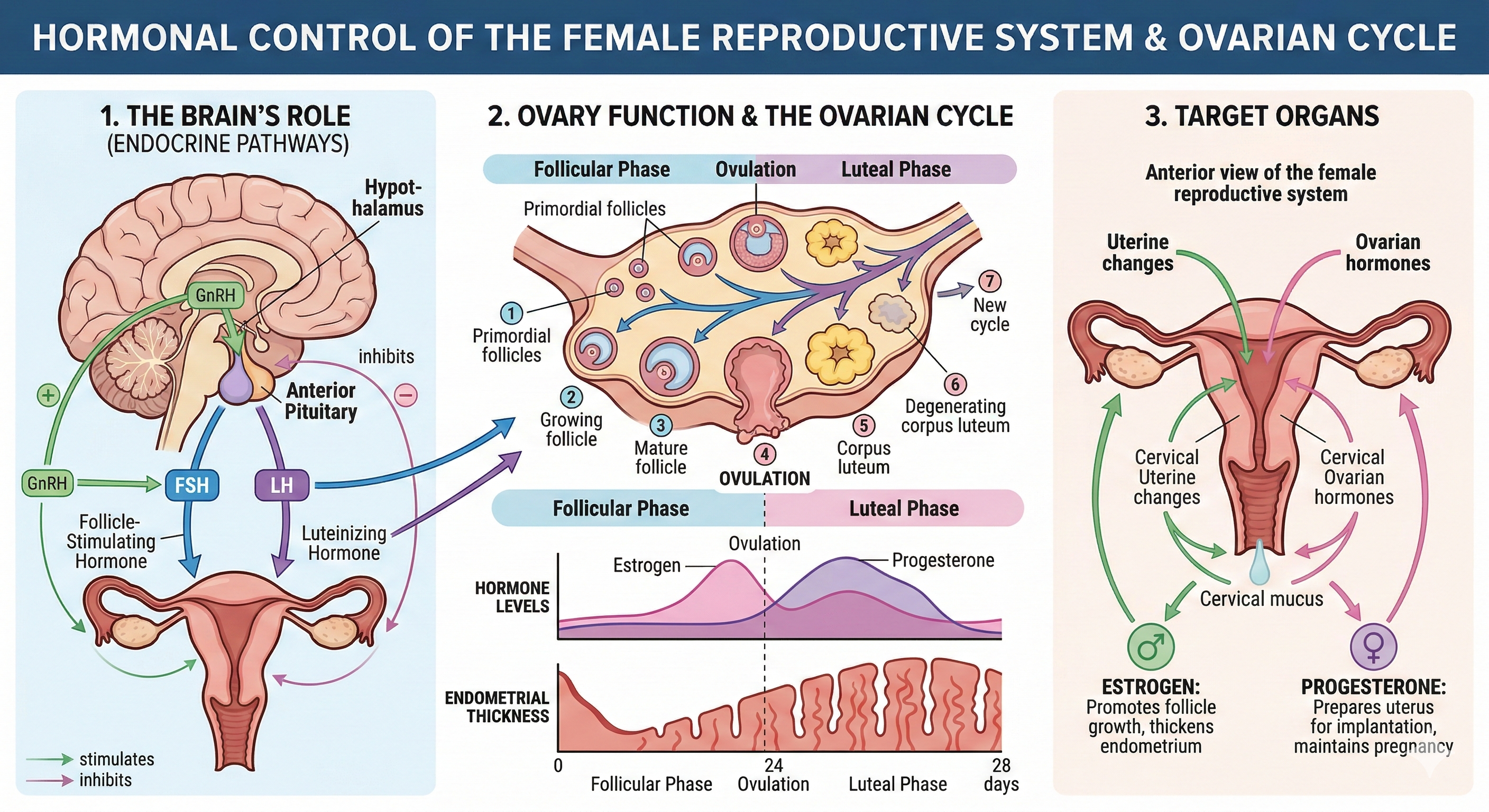
Polycystic ovary syndrome (PCOS) is a hormonal condition that affects women of reproductive age. Despite what the name suggests, it is not actually defined by cysts on the ovaries. Many women with PCOS have no visible cysts at all, while some women without the condition do. The name, frankly, is one of the reasons so many people misunderstand it.
What PCOS actually involves is an imbalance in reproductive hormones… particularly an excess of androgens, which are hormones often associated with men but present in women too. This hormonal disruption affects how the ovaries function, how regularly a woman ovulates, and how the body processes insulin.
The World Health Organization (WHO) describes PCOS as the most common cause of anovulation: the absence of ovulation among women globally, and a leading cause of infertility. But its effects reach far beyond the reproductive system.
Here is the number that should make everyone pay attention: an estimated 4.5 million Filipinas are living with PCOS. And up to 70% of PCOS cases globally may go undiagnosed, according to the WHO. That means millions of Filipino women are walking around with a condition they do not know they have… managing symptoms they have been told are just part of being a woman.[dost.gov]
Globally, PCOS affects between 8 and 13% of women of reproductive age, depending on the diagnostic criteria used. In Southeast Asia, the burden is significant and growing. A 2025 study published in a peer-reviewed journal found that PCOS cases in Southeast Asia have risen by roughly 80% over the past 30 years, with over 10 million prevalent cases recorded in the region in 2021 alone.[pmc.ncbi.nlm.nih]
In the Philippines specifically, delayed diagnosis is the norm rather than the exception; and the reasons have less to do with the condition itself and more to do with how women's health has historically been treated.[eluvohealth]
This is the part that is hardest to sit with. Most Filipinas with PCOS are not diagnosed because their symptoms are normalized, dismissed, or simply not connected to each other.
Think about it. Irregular periods? "Lagay ka lang ng stress." Acne as an adult? "Hormones lang yan." Weight gain despite eating well? "Mataba ka lang talaga."
Difficulty getting pregnant? Only then does someone start looking deeper.
Several factors contribute to delayed PCOS diagnosis in the Philippines:
Irregular periods are seen as normal. Many women grow up being told that unpredictable cycles are just part of life. Without anyone flagging it as a clinical concern early on, years can pass before it becomes a conversation with a doctor.
PCOS is still seen primarily as a fertility problem. Many healthcare interactions focus on reproductive outcomes rather than overall hormonal health. Women who are not yet trying to conceive may not get screened at all.
Lean women are often overlooked. One of the most persistent myths about PCOS is that it only affects overweight women. In reality, PCOS affects women of all body types. A woman who is slim, active, and eating well can still have significant hormonal imbalance and insulin resistance, and may be dismissed because she "doesn't look like" she has PCOS.[dost.gov]
Short consultations and limited routine screening mean that the dots between symptoms — irregular periods, acne, hair changes, mood shifts, difficulty losing weight — are rarely connected unless a woman specifically asks the right questions or pushes for answers.[eluvohealth]
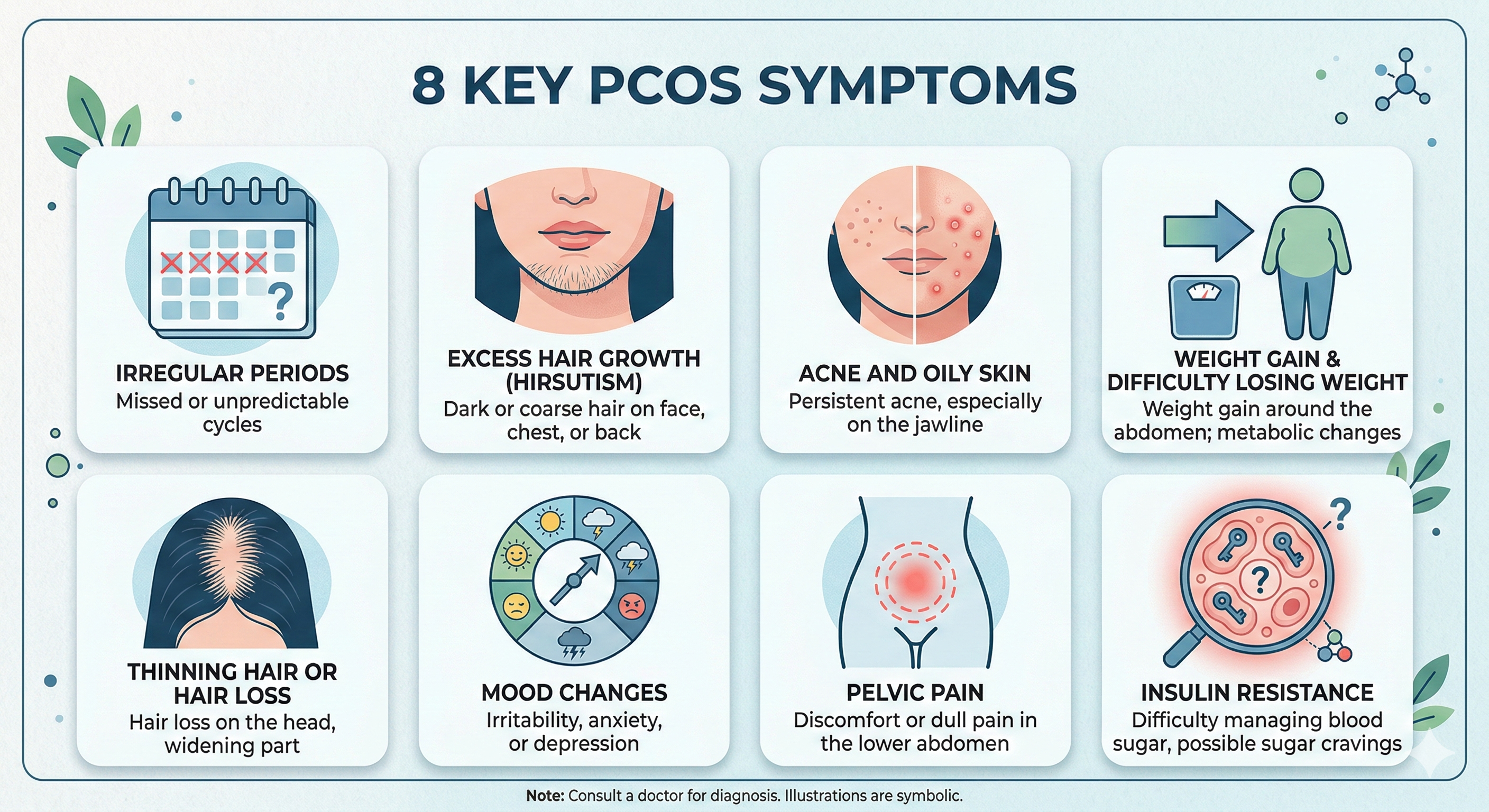
PCOS symptoms can look very different from one woman to the next, which is part of what makes it so easy to miss. Some women have many symptoms. Others have just one or two. The most common signs include:
Irregular or absent periods. This is often the most obvious sign — cycles that are unpredictable, very long, or skipped entirely. Some women with PCOS have fewer than eight periods a year.
Excess hair growth (hirsutism). Unwanted hair on the face, chin, chest, or back due to elevated androgen levels. This is one of the most emotionally distressing symptoms for many women.
Acne or oily skin. Persistent breakouts, particularly along the jawline, chin, and back, that don't respond well to typical skincare treatments.
Thinning hair or hair loss. Paradoxically, while some women with PCOS grow excess hair on the body, others experience hair thinning on the scalp, similar to male-pattern baldness.
Weight gain, especially around the abdomen. Many women with PCOS struggle with weight despite following a healthy lifestyle, largely because of the role insulin resistance plays in how the body stores fat.
Difficulty getting pregnant. Because PCOS disrupts ovulation, it is one of the leading causes of infertility in women. However, many women with PCOS do conceive, especially with the right support.
Mood changes, anxiety, and depression. The hormonal disruption of PCOS has real psychological effects. Research consistently shows higher rates of anxiety and depression among women with PCOS — effects that are often undertreated.[pubmed.ncbi.nlm.nih]
Darkening of the skin. Dark patches, particularly around the neck, armpits, or groin, can be a sign of insulin resistance associated with PCOS.
This connection is one of the most important — and least talked about — aspects of PCOS in Filipino women.
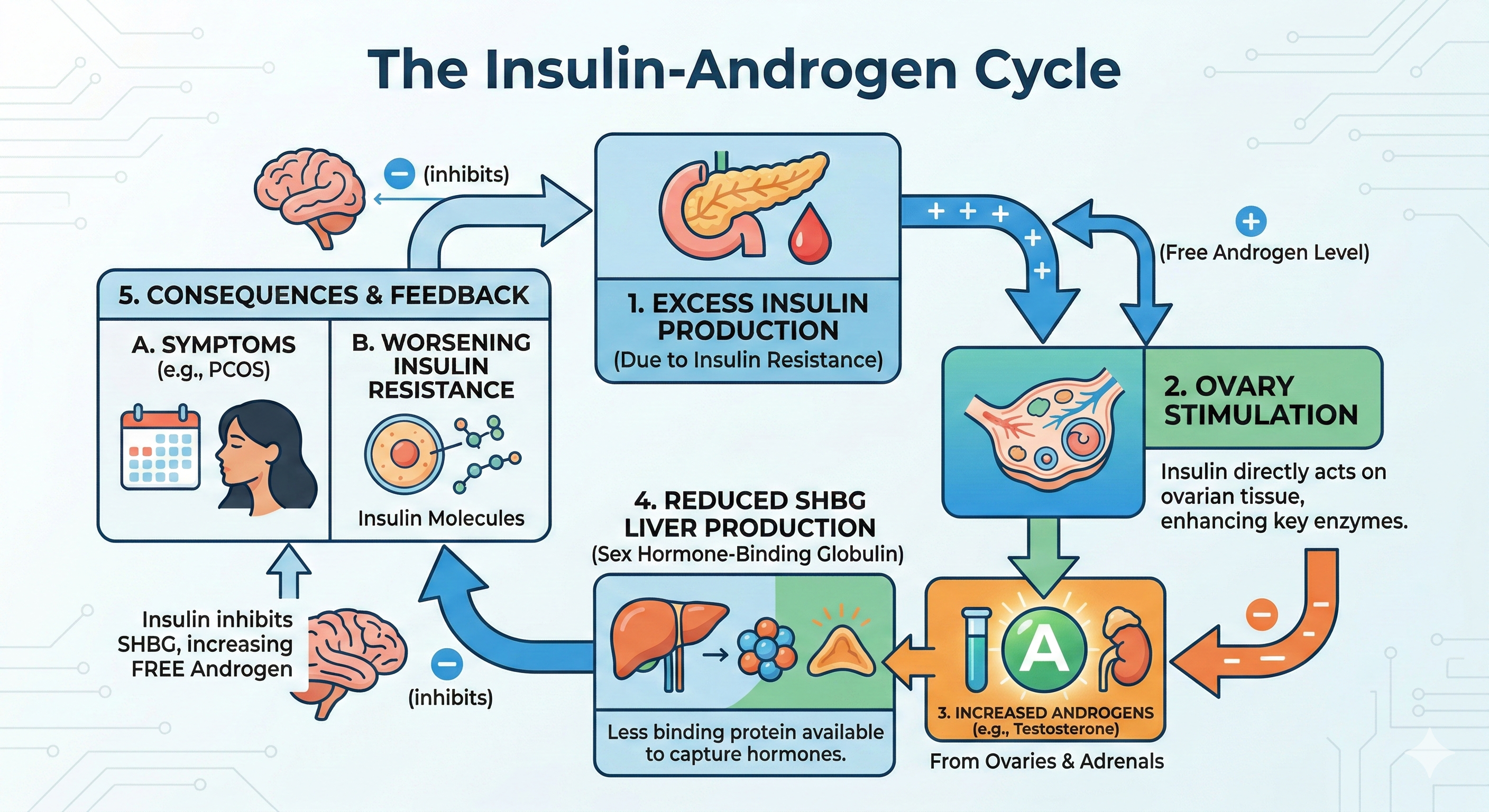
Insulin resistance means the body's cells don't respond properly to insulin, the hormone that helps move glucose from the blood into cells for energy. When cells resist insulin, the body produces more and more of it to compensate. Those elevated insulin levels then stimulate the ovaries to produce more androgens — and that hormonal imbalance drives many of the classic PCOS symptoms.
Research estimates that up to 70% of women with PCOS have some degree of insulin resistance, regardless of their body weight. This is why PCOS is now increasingly recognized not just as a reproductive condition but as a metabolic one — with long-term implications for blood sugar, cardiovascular health, and the risk of type 2 diabetes.[pubmed.ncbi.nlm.nih]
For Filipino women, whose diets are often rice-heavy and whose cultural food traditions can be high in refined carbohydrates, this metabolic dimension of PCOS deserves particular attention. It does not mean rice is the enemy. But it does mean that understanding how food affects insulin — and by extension hormones — can make a real difference in managing PCOS day to day.

There is no single test for PCOS. Doctors typically use what is called the Rotterdam Criteria, which says a woman can be diagnosed with PCOS if she has at least two of the following three characteristics:[ncbi.nlm.nih]
A proper PCOS diagnosis usually involves a combination of:
It is also a diagnosis of exclusion, meaning doctors need to rule out other conditions — like thyroid disorders or elevated prolactin — that can cause similar symptoms. This is why it sometimes takes more than one visit, and why having a doctor who listens carefully makes such a difference.
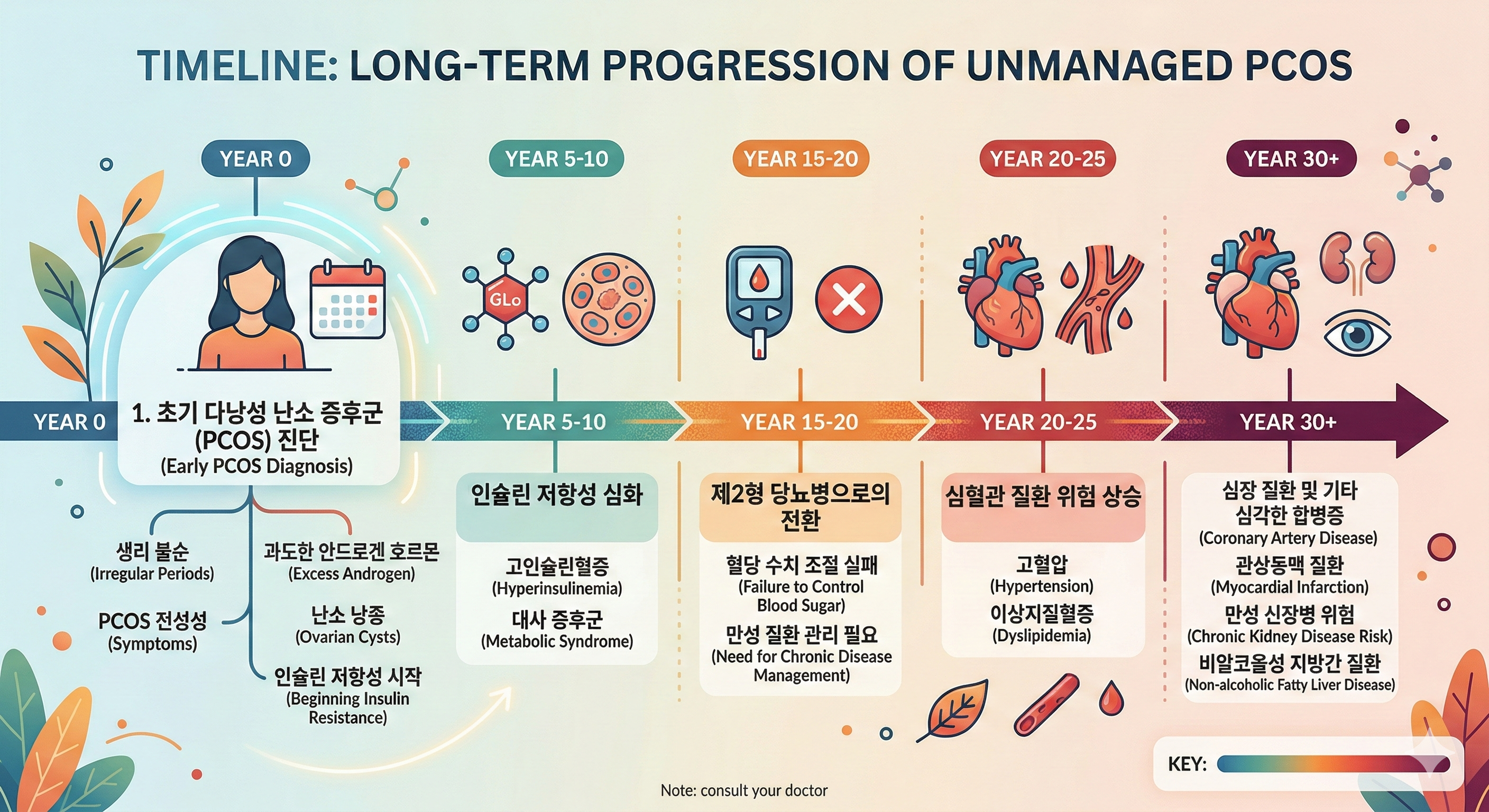
This is where the conversation needs to go beyond periods and fertility — because PCOS is a lifelong condition with real long-term consequences if left unmanaged.
Increased risk of type 2 diabetes. Women with PCOS are significantly more likely to develop type 2 diabetes, largely due to insulin resistance. Early lifestyle intervention can dramatically reduce this risk.
Cardiovascular disease. A 2025 PubMed study now classifies PCOS as a cardiovascular risk-enhancing condition. The combination of insulin resistance, inflammation, and abnormal cholesterol levels puts women with PCOS at higher long-term risk of heart disease — a risk that compounds with age.[pubmed.ncbi.nlm.nih]
Endometrial cancer. Irregular or absent periods mean the uterine lining can build up over time without being shed. This increases the risk of endometrial hyperplasia and, eventually, endometrial cancer if left untreated.
Mental health challenges. Depression, anxiety, and poor body image are significantly more common among women with PCOS — not just as a reaction to symptoms, but because of the hormonal and neurological effects of the condition itself.[healthfirst.com]
Sleep apnea. Women with PCOS, particularly those with obesity, have a higher risk of sleep apnea — a condition where breathing stops and starts during sleep, affecting energy, mood, and cardiovascular health.
Yes — and this is the hopeful part of the story. PCOS cannot be cured, but it can absolutely be managed, and for many women, managed very well. Treatment depends on a woman's individual symptoms, goals, and whether she is hoping to conceive.
Lifestyle changes are almost always the first line of treatment. Even modest improvements in diet quality, regular physical activity, and sleep can meaningfully reduce insulin resistance, regulate periods, and improve overall hormonal balance. This is not about losing a lot of weight quickly — it is about steady, sustainable changes that the body responds to over time.
Medications may be recommended depending on symptoms. Hormonal contraceptives are commonly used to regulate periods and reduce androgen-related symptoms like acne and excess hair. Metformin, a medication that improves insulin sensitivity, is often prescribed alongside lifestyle interventions. For women trying to conceive, ovulation-stimulating medications may be used under specialist care.
Newer research is also opening promising doors. A 2024 study from Vanderbilt University explored the use of artemisinin — a compound derived from a plant used in malaria treatment — as a potential PCOS therapy. In a small pilot trial, it showed improvements in hormone levels and menstrual regularity in over half of participants. While still early-stage, it signals that more targeted treatments may be on the horizon.[medschool.vanderbilt]
Mental health support matters too. Managing the emotional weight of PCOS — the frustration, the body image struggles, the anxiety about fertility — is a real and valid part of care. Therapy, peer support, and open conversations with a trusted doctor all play a role.

Start by tracking your symptoms. Write down your cycle dates, note any changes in your skin, hair, weight, or mood, and bring that record to your doctor. The more information you can share, the easier it is for a healthcare provider to connect the dots.
You do not have to wait until you are trying to get pregnant to take PCOS seriously. Early diagnosis means earlier management — and that matters enormously for your long-term health, not just your fertility.
If getting to a clinic feels like a barrier, a telemedicine consultation is a practical first step. You can speak to a doctor from home, share your symptoms, and find out what tests or referrals make sense for your situation. For those who prefer face-to-face care or need a physical examination, a clinic visit or home visit through 800Zed connects you with qualified healthcare professionals across the Philippines.
PCOS is common. It is manageable. And you deserve answers — not years of being told your symptoms are normal when they are not.
Book a consultation with 800Zed today and take the first step toward understanding your hormonal health: https://800zed.com
_______________
Stay connected with the 800ZED Blog! Get the latest health tips, wellness insights, and simple daily habits that can boost your well-being — from your sleep routine to your screen time. Subscribe now and take small steps toward a healthier, happier you.
Copyright © 2026 by 800zed. All Rights Reserved.
We use cookies to give you the best service on our site. By continuing to use the site you consent to our Privacy Policy
📲 Install 800 ZED App for quick access!
📲 Install 800 ZED App on your iPhone
Tap Share → Add to Home Screen
📲 Install 800 ZED on Firefox
Open menu ☰ → Install
Subscribe our newsletter for latest updates
Get the latest updates, promotions, and news delivered straight to your inbox.